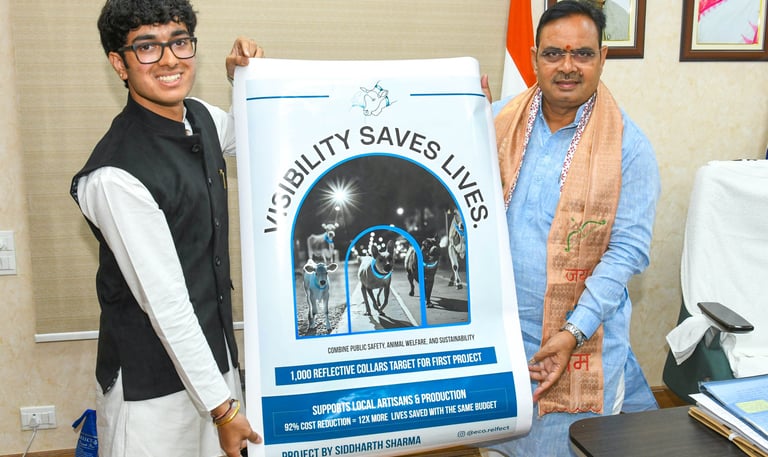
Chief Minister of Rajasthan
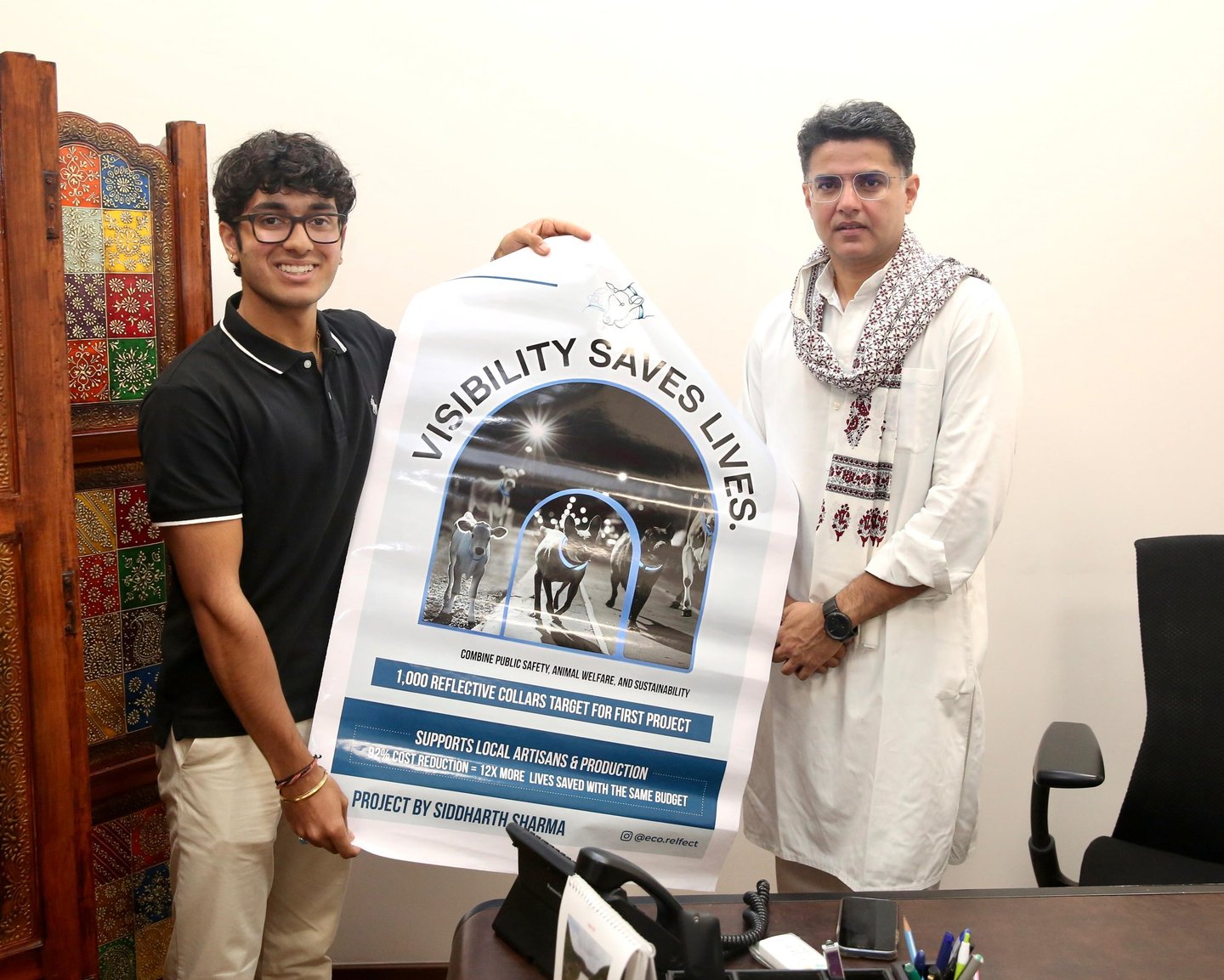
Former Deputy Chief Minister of Rajasthan
Secretary to the Government of Rajasthan
Eco Reflect
On my way to school, I kept noticing the same thing.
Stray dogs and cattle injured on the side of the road. Sometimes after an accident, sometimes not even making it through one. It wasn’t rare, it was routine. And what stood out was how preventable it felt. Most of these accidents happened at night, on poorly lit roads where drivers simply couldn’t see animals in time.
So I started looking into existing solutions.
Reflective collars already existed, but they weren’t built for real conditions. They were expensive, relied on radium and plastic, and weren’t designed for scale. That meant they never reached the animals that actually needed them.
That’s where Eco Reflect began.
I built a collar from the ground up with one constraint: it had to scale. I replaced radium with eco-friendly polyester reflective fabric, reduced plastic usage significantly, and brought the cost down from ₹200 to ₹20.
But designing it was only part of the work.
I spent months testing materials, working with manufacturers, and refining prototypes to ensure durability, safety, and comfort. Then I moved to execution. With veterinarians, local teams, and volunteers, over 1,000 collars were deployed across Rajasthan’s most accident-prone areas.
That’s when the initiative moved beyond just me.
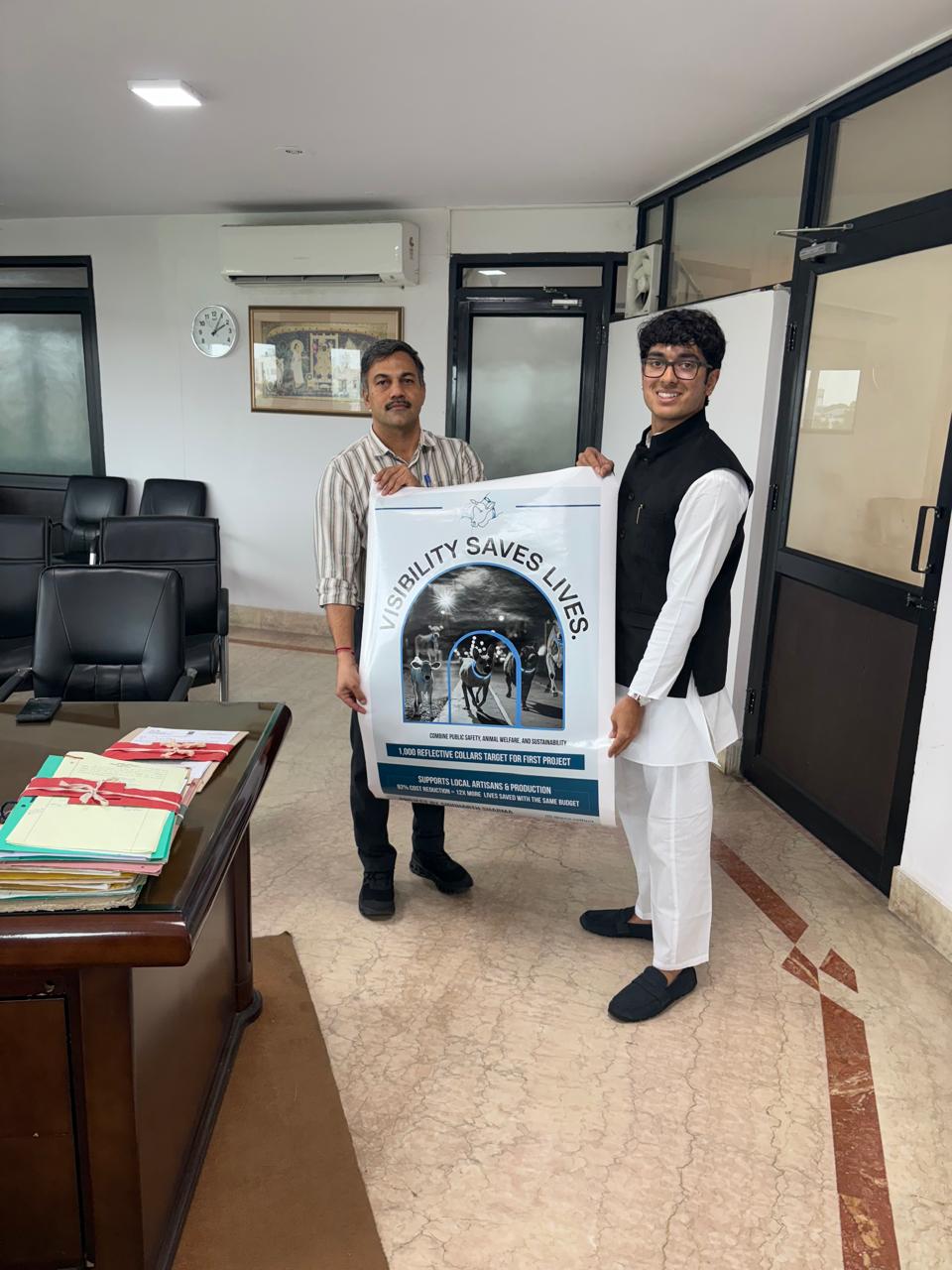
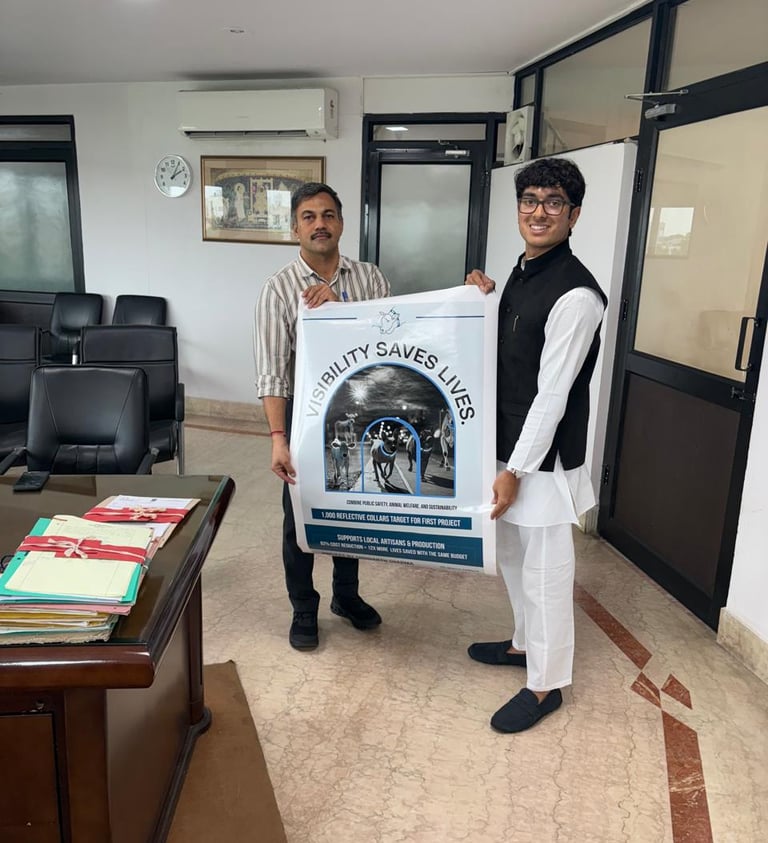
It was recognized by Chief Minister Bhajan Lal Sharma Ji, who launched the project’s official poster, and supported at the administrative level by Secretary to the Govt. IAS Ravi Jain Ji. It also received formal backing from Animal Husbandry Minister Joraram Kumawat Ji, Women and Child Development Minister Manju Baghmar Ji, and Mayor of Greater Jaipur Somya Gurjar Ji, helping scale it from a student-led initiative to a government-supported model.
Eco Reflect is simple in principle. If visibility is the problem, then visibility is the solution.
And if that solution is affordable and scalable, it shouldn’t stay local. The goal now is to expand across India and beyond, turning something I noticed on my way to school into a system that prevents these accidents altogether.
Visit our Instagram page
Students for Last-Mile Learning
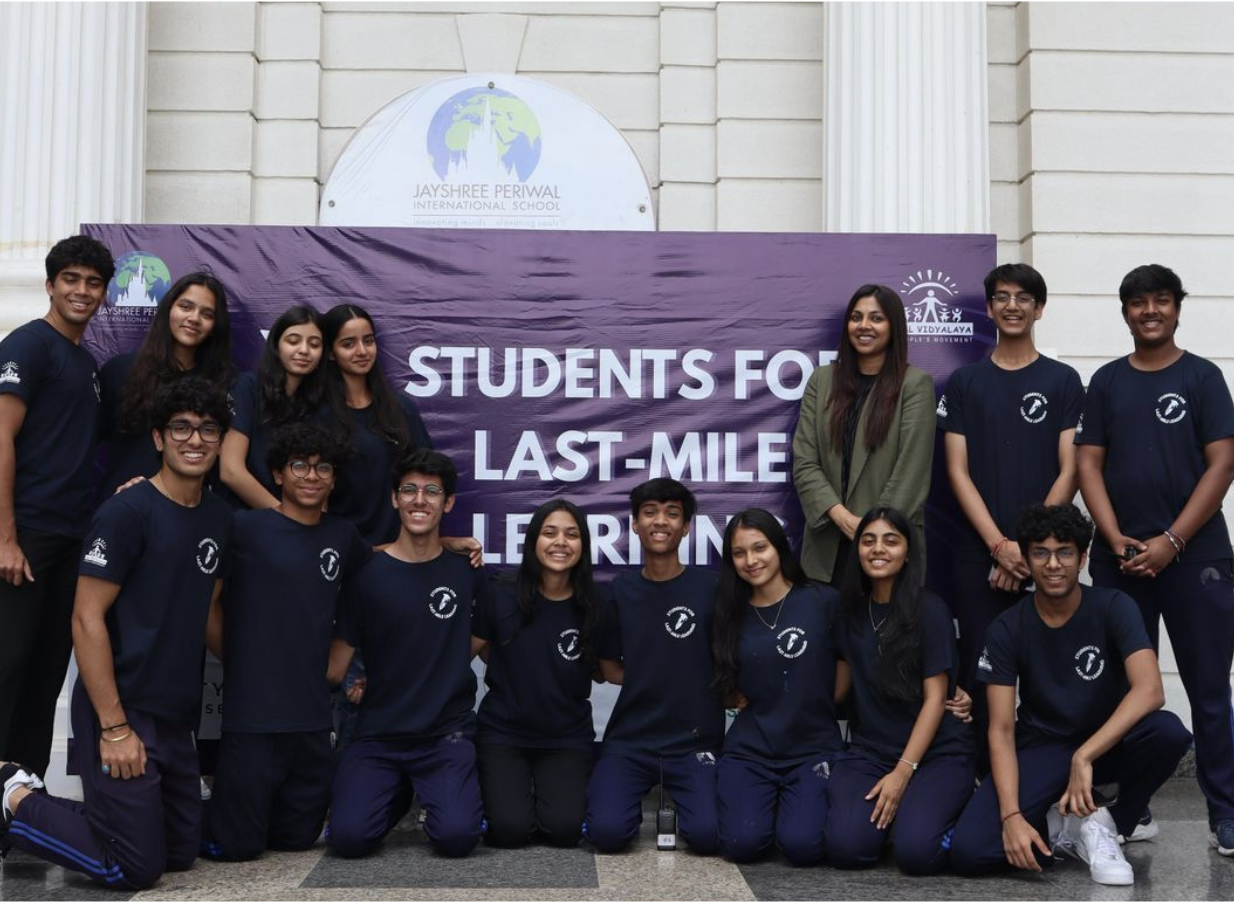
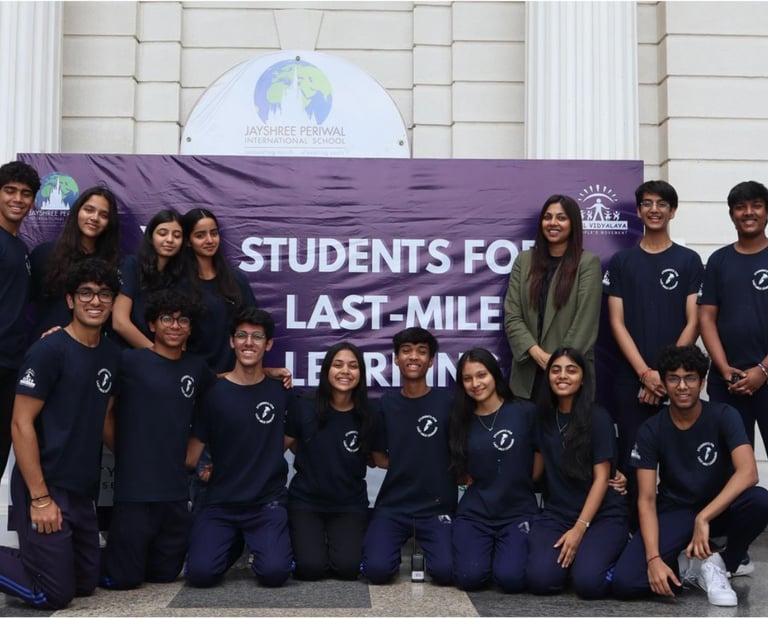
When I started Students for Last Mile Learning in May 2025, it came from a clear realization. Access to education wasn’t the real issue. Learning was. In many underserved communities, students were in classrooms but still falling behind because foundational gaps were never addressed.
I wanted to work at that exact point. The last mile where students are present, but not progressing.
We partnered with the Ekal Abhiyan Foundation and focused on both access and quality. As Finance Head, I led outreach to companies with unallocated CSR funds, building a pipeline that could directly support rural single-teacher schools. It meant constant calls, negotiations, and refining strategy in real time, but it translated into tangible impact. We raised $185,000, supporting 550 schools and over 16,500 students. This effort earned us a Noble World Record for the largest fundraiser by high school students for tribal education.
But I didn’t want the work to stop at fundraising.
We worked directly with students through awareness campaigns in government schools, focusing on foundational literacy and numeracy. I also helped lead SolvED, a student hackathon designed to generate practical solutions for rural education, and Rooted in Culture, which highlighted the importance of preserving local identity alongside development. Our flagship event brought together justices, MLAs, and ministers, creating a space where student-led ideas were taken seriously at the highest levels
What this experience made clear to me is simple.
Educational inequality doesn’t fix itself. It requires deliberate, consistent intervention.
Students for Last Mile Learning wasn’t just about service. It was about responsibility. And for me, it proved that when you work with clarity and intent, even something as complex as the last mile can be made reachable.
Samvidhan Setu
Samvidhan Setu began with a simple observation: most students are deeply aware of politics, but remain distant from the systems that actually shape it. News is consumed, opinions are formed, debates happen, but very few ever step inside the institutions where decisions are made. That gap, between curiosity and participation, is where Samvidhan Setu was built.
At its core, Samvidhan Setu is an attempt to make governance tangible. It connects students directly with political leaders, policymakers, and public institutions, not through simulations or second-hand learning, but through real exposure. Internships, interactions, and structured opportunities allow students to see how policy moves from discussion to implementation. It shifts civics from a subject in a textbook to something lived and experienced.
What makes Samvidhan Setu distinct is its focus on access and intent. The platform identifies driven students, filters them through a merit-based process, and places them in environments where they can contribute meaningfully. At the same time, it works closely with political offices to ensure that this engagement is not symbolic, but substantive. Students are not observers; they are participants in the ecosystem.
Over time, Samvidhan Setu has grown into more than a program. It is a bridge, true to its name, between young individuals who want to understand power, and the institutions that exercise it. In doing so, it aims to build a generation that does not just critique governance from the outside, but understands it from within and is prepared to shape it responsibly.
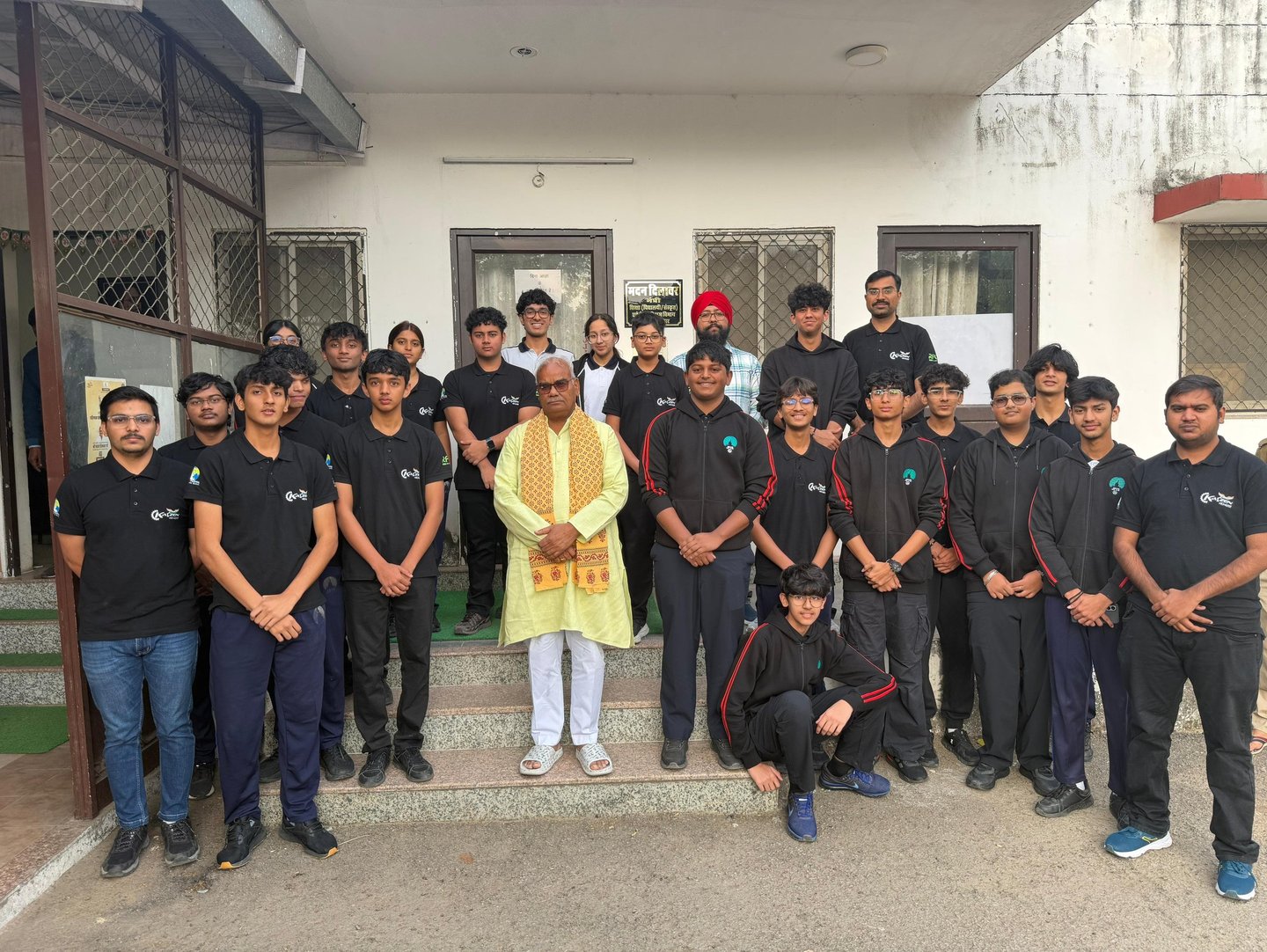
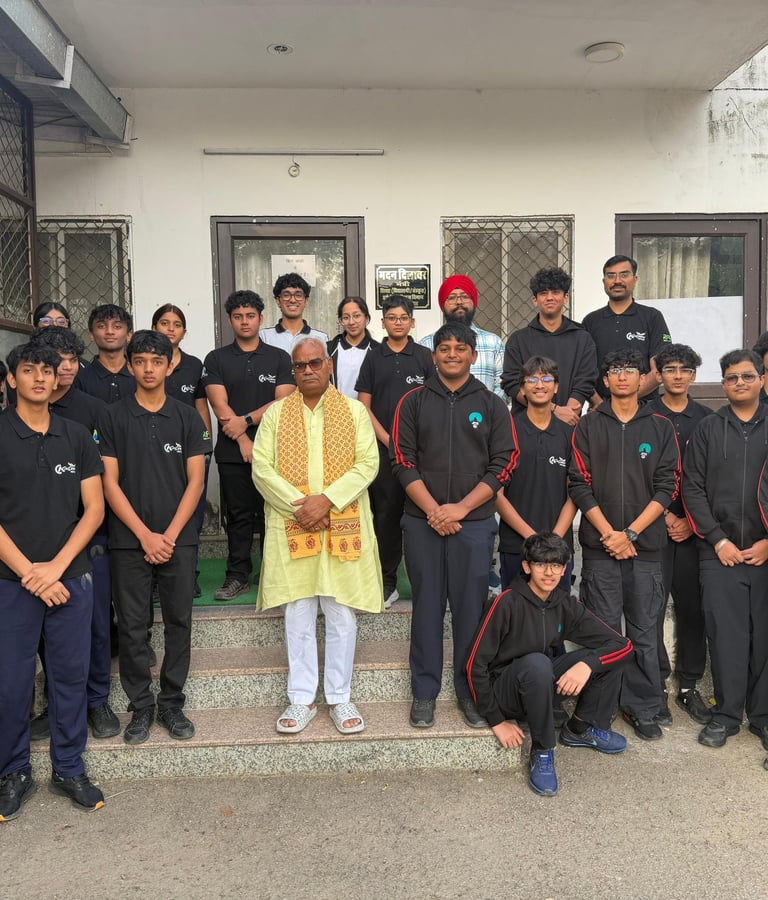
Meeting of the First Robotics Competition (FRC) Team of my school with the Hon'ble Education Minister for encouragement and for Government School Partnership
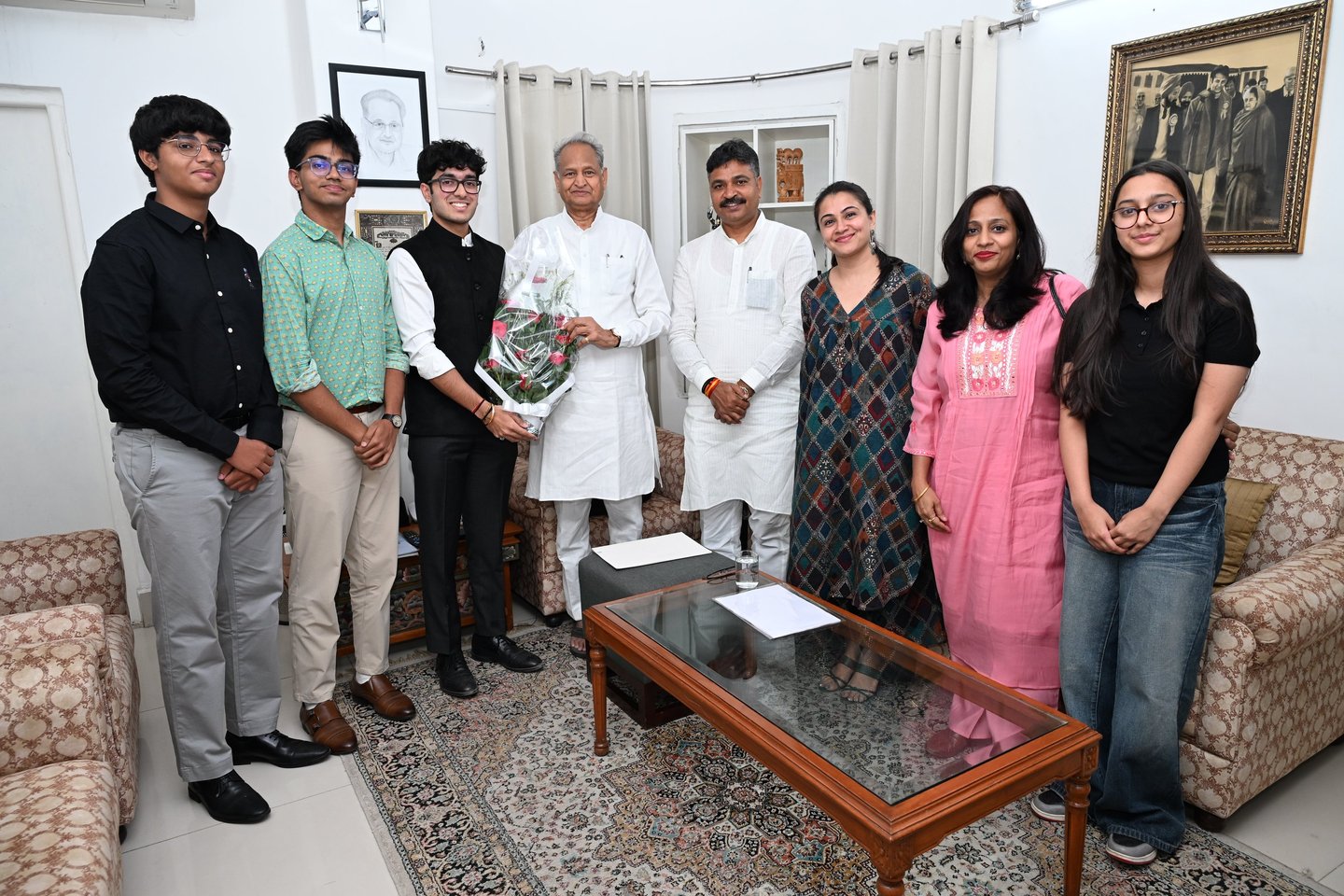
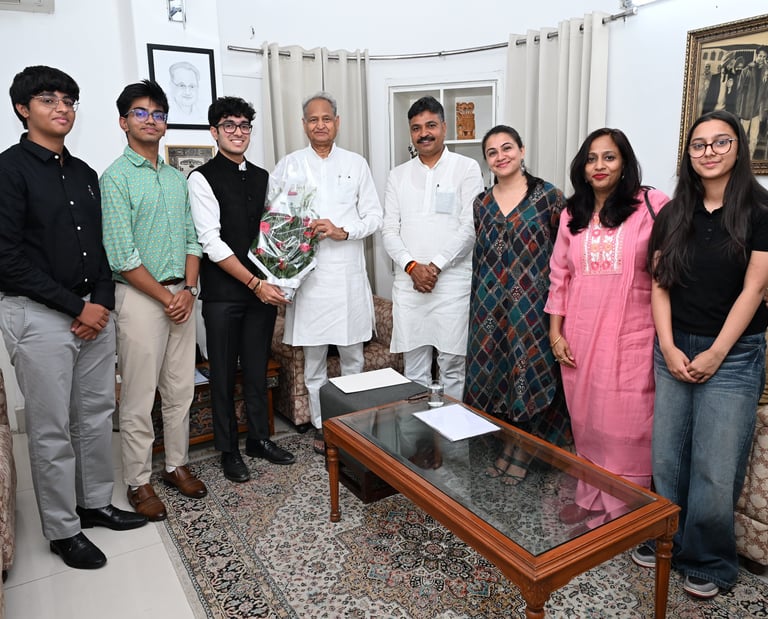
Meeting with the Former Chief Minister of Rajasthan and the Leader of the opposition of Rajasthan for Internship placement in the Indian National Congress
Swaraj (more details coming soon)
Swaraj began in the same waiting rooms where Samvidhan Setu did. As one of the few high-school students interning inside Rajasthan's government, I spent hours outside offices and in corridors, watching how ordinary people approached the institutions meant to serve them. What struck me was not that the system was closed, but that it was unexplained. People lived under decisions they had never been taught to understand. And the students I met, sharp and curious, treated politics as something distant, something that would matter to them only later.
I didn't believe that. A young person's stake in their country does not begin at eighteen. They live with these decisions now.
The name Swaraj means self-rule. Gandhi's argument was that self-rule is hollow if citizens do not understand the machinery they are meant to govern. That is the gap I set out to close.
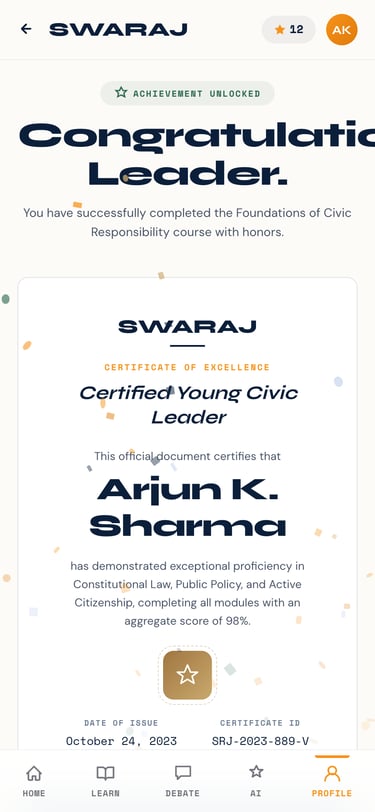
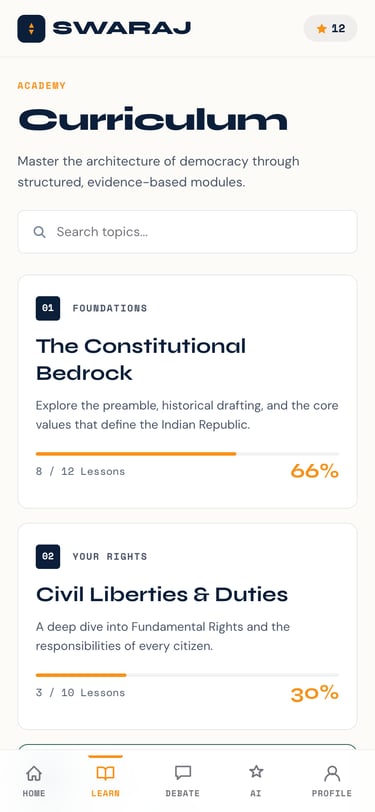
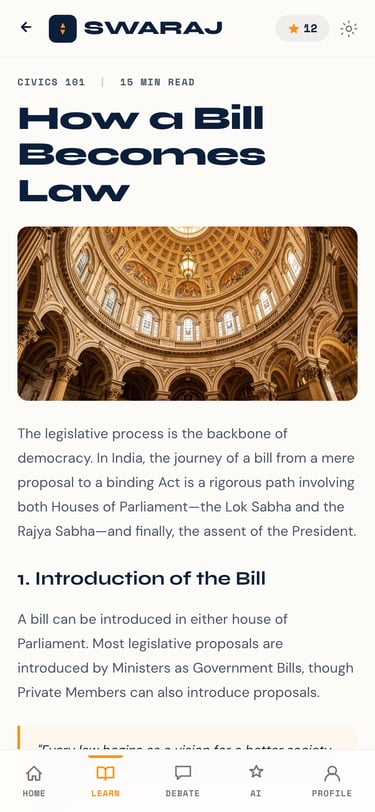
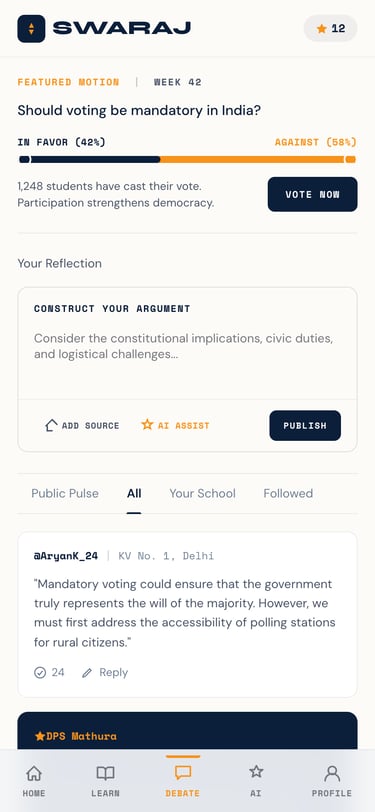
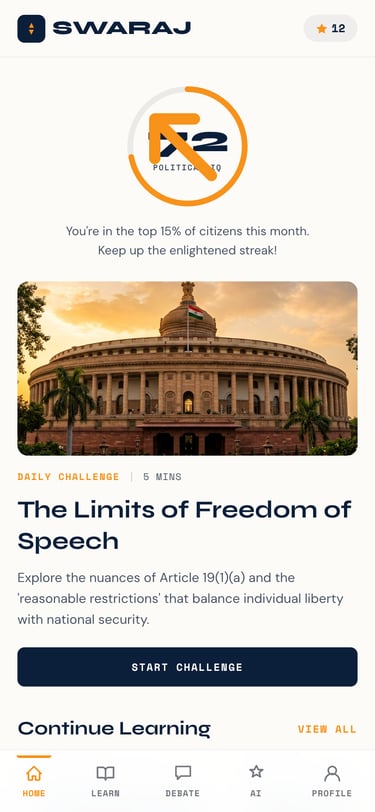
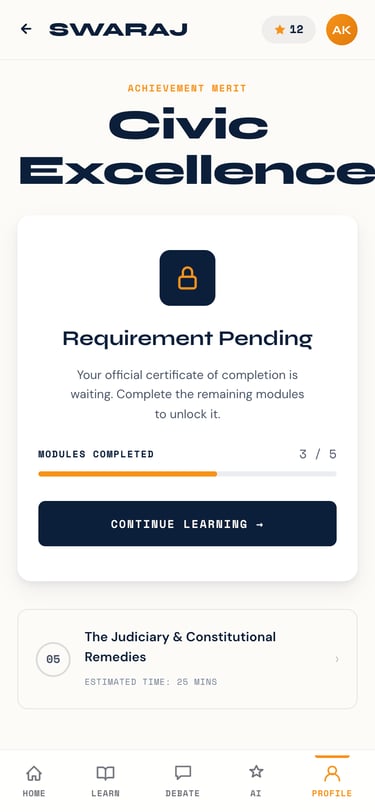
So I built Swaraj: India's first gamified civic-education app that teaches students in Classes 9 to 12 how Indian politics actually works, and lets them step into it rather than only read about it. Instead of dry lessons, the whole experience is built like a game. It is structured as ten sequential story levels, moving from the Constitution to how an ordinary person enters the political system, with each level unlocking the next.
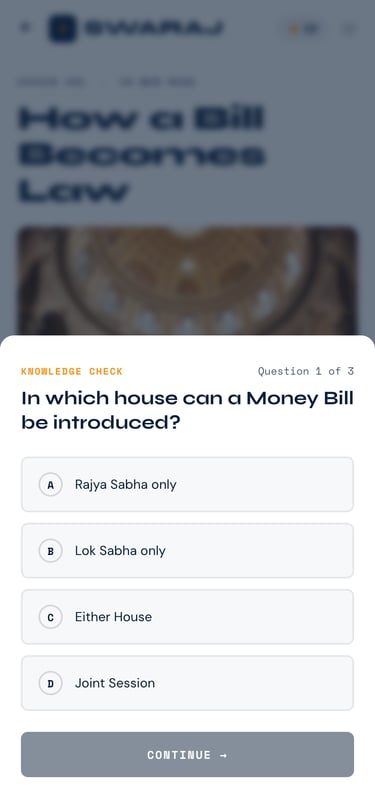
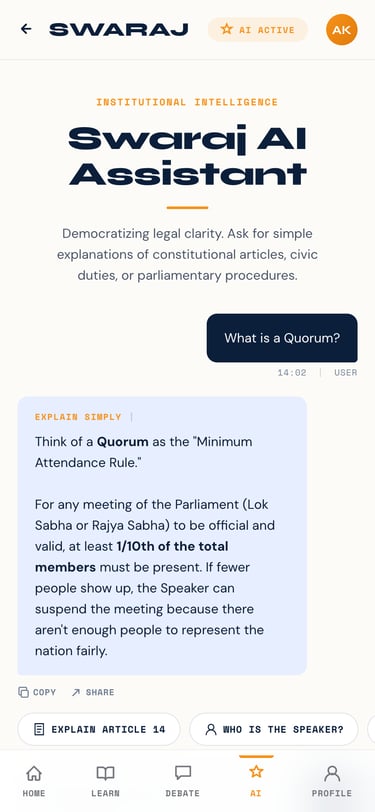
The features are where it comes alive. A Debate Arena lets students argue real policy questions and scores them on the quality of their reasoning, not the side they take, on the principle that there is no wrong political view, only weak argument. A Daily Challenge built on live Rajasthan and national news turns following politics into a daily habit. An AI chatbot, trained on Swaraj's own content, answers the questions a textbook never will, down to what a student's own MLA actually does. And the entire game personalises itself to each student's constituency and local representatives, so politics stops being abstract and starts feeling like home.
What makes Swaraj different is who it is built for. It runs on Android and iOS, in Hindi and English, designed for the rural and marginalised students who sit furthest from these institutions. I plan to approach the Government of Rajasthan to bring Swaraj into government-school classrooms, so that the students with the least access are the first to gain it.
Swaraj rests on a single premise: children are not future citizens waiting their turn. They are present citizens with a stake in today's decisions. This is my attempt to hand them the system, explained, and make understanding it feel less like homework and more like play.
Visit- swaraj.org.in